

Door Fan Test: How It Improves Building Airtightness and Performance
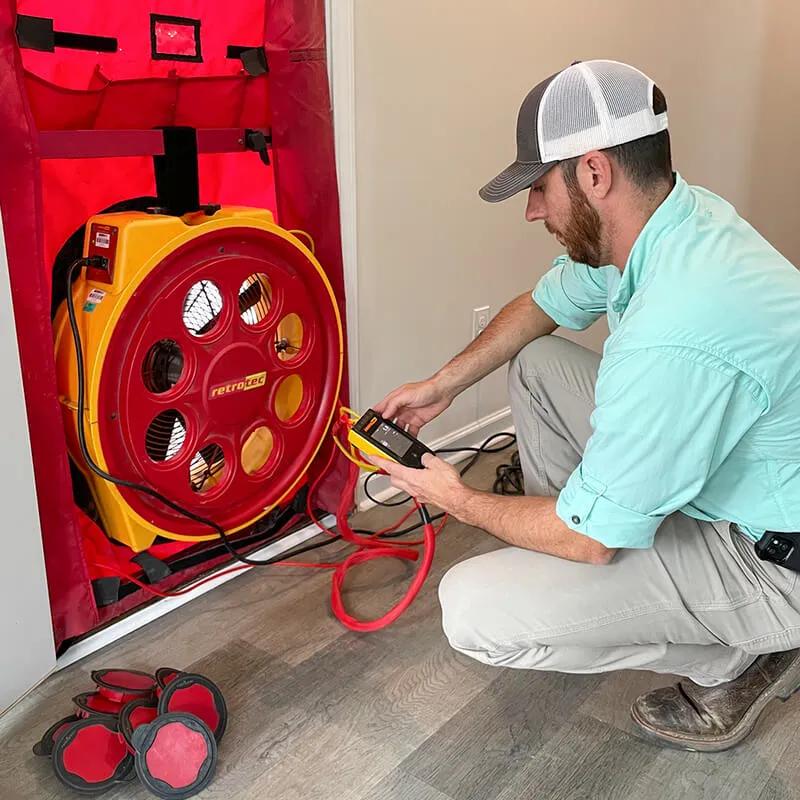
Modern buildings are expected to provide comfort, energy efficiency, indoor air quality, and reliable protection from external conditions. While the visible elements of a building often receive considerable attention during construction, hidden air leakage through the building envelope can significantly affect overall performance. A door fan test is an important diagnostic method used to evaluate the airtightness of a building or enclosed space and identify unwanted air leakage.
Cornerstone Middle East provides specialized building performance and inspection services, including room integrity testing using door fan testing methods. Its service portfolio also includes air leakage and blower door testing, building envelope commissioning, thermography, water infiltration studies, and other specialized technical assessments.
What Is a Door Fan Test?
A door fan test is a controlled procedure used to determine how effectively an enclosed space prevents uncontrolled air movement through its boundaries. During the assessment, a calibrated fan is temporarily installed within a doorway or suitable opening. The equipment creates a controlled pressure difference between the inside and outside of the test area, while instruments measure airflow and pressure.
The relationship between the airflow required to maintain a particular pressure difference provides useful information about the airtightness of the enclosure. In simple terms, a greater amount of airflow required to maintain the target pressure can indicate greater leakage through the building envelope. Standardized blower-door methods use pressure and airflow measurements to characterize airtightness.
This makes the procedure valuable as both a performance assessment and an investigative inspection. Rather than relying only on visual observations, building professionals can use measured data to understand whether an enclosure is performing as intended.
Why Airtightness Matters in Modern Buildings
A building envelope is designed to control the movement of air, moisture, heat, and other environmental influences between conditioned interior spaces and the outside environment. Uncontrolled air leakage can reduce the effectiveness of this envelope and place additional demands on HVAC systems.
When conditioned air escapes through gaps around doors, windows, joints, service penetrations, construction interfaces, or other weaknesses, heating and cooling systems may need to operate more frequently to maintain indoor conditions. Poor airtightness can also affect occupant comfort and contribute to moisture-related concerns under certain environmental conditions. ASTM notes that building airtightness can influence space-conditioning loads, occupant comfort, indoor air quality, and building durability.
For this reason, airtightness assessment should be considered an important component of a broader building inspection and commissioning strategy, particularly where building performance requirements are demanding.
How a Door Fan Test Works
The assessment begins with preparation of the area being tested. The test zone is defined, relevant openings are identified, and conditions are established so that measurements represent the intended enclosure. A temporary fan assembly is then fitted into a doorway to create a controlled pressure difference.
Once the equipment is installed, the testing team operates the fan while monitoring pressure and airflow. Measurements can be taken at controlled pressure levels, depending on the applicable testing procedure and project requirements. The collected information is then analyzed to determine the airtightness characteristics of the tested enclosure.
The basic principle is straightforward: the fan creates a pressure difference, while calibrated instruments measure the airflow required to maintain that condition. However, accurate results depend heavily on appropriate preparation, equipment calibration, environmental conditions, and competent interpretation of the measurements.
What Can Be Identified During the Assessment?
One of the major advantages of this assessment is that it can help inspection professionals move beyond simply establishing whether leakage exists. Once an enclosure is placed under controlled pressure, air movement through unwanted openings can become easier to detect.
Potential leakage locations may include:
Gaps around external doors and windows
Poorly sealed service penetrations
Joints between construction materials
Weak points around building-envelope interfaces
Inadequately sealed mechanical or electrical openings
Deficiencies around access panels and other openings
Smoke visualization, airflow measurement, thermal imaging, and other diagnostic techniques may also support an investigation where appropriate. These methods can help inspection teams locate areas that require corrective action before the enclosure is retested.
Importance During Construction and Commissioning
Performing airtightness assessments at the appropriate stage of a project can help identify construction deficiencies before they become difficult or expensive to correct. If an inspection is performed only after finishes and systems are fully installed, access to some leakage locations may be more complicated.
A door fan test can therefore be incorporated into a building performance and commissioning program. Testing before final handover can provide useful evidence that the enclosure has been constructed according to the required performance expectations.
Cornerstone Middle East's published services include building envelope commissioning and air leakage/blower door testing, demonstrating the role of airtightness assessment within a wider approach to building performance.
Benefits for Energy Efficiency and Occupant Comfort
Airtight construction does not mean that a building should be completely isolated from controlled ventilation. Instead, the objective is to reduce unintended air movement through the envelope while allowing ventilation systems to provide the necessary amount of fresh air.
Reducing uncontrolled leakage can help buildings maintain desired indoor conditions more consistently. This is particularly relevant in climates where cooling loads can be substantial. By reducing unwanted air infiltration, the building envelope can work more effectively with mechanical systems.
The results can also help project teams prioritize remedial work. Instead of making assumptions about where air is escaping, inspection findings can direct attention toward specific parts of the enclosure.
Door Fan Testing for Room Integrity
Airtightness assessment is not limited to whole-building applications. It can also be valuable for specialized rooms and controlled environments where maintaining enclosure integrity is important.
Cornerstone Middle East specifically lists room integrity testing, described as a door fan test, among its specialized testing services.
In such applications, the objective is to evaluate whether the room can maintain the required pressure or containment characteristics. This can be particularly relevant where controlled environmental conditions, contamination prevention, or specialized operational requirements make enclosure integrity important.
The exact testing requirements should always be established according to the room's intended function, project specifications, applicable standards, and acceptance criteria.
Factors That Can Affect Test Accuracy
A reliable assessment requires more than simply placing a fan in a doorway. Environmental conditions and preparation can influence measurements. Wind, temperature differences, building configuration, and the condition of openings can all affect the accuracy or interpretation of airtightness measurements.
ASTM E1827 explains that measurement uncertainty can increase with higher wind speeds and larger indoor-outdoor temperature differences. The standard also distinguishes airtightness characterization from measuring the building's natural air-change rate during normal operation.
For this reason, qualified personnel should establish suitable test conditions, document relevant factors, use appropriate calibrated equipment, and interpret results in accordance with the applicable project requirements.
Why Professional Testing Makes a Difference
The value of an airtightness assessment depends on the quality of the entire inspection process. Proper equipment setup, accurate pressure measurement, correct data collection, appropriate preparation, and meaningful reporting are all essential.
An experienced inspection company can also help project teams understand what the results mean in practical terms. A test report should not simply present numbers; it should provide useful information that supports decisions about construction quality, corrective measures, commissioning, and final acceptance.
Cornerstone Middle East approaches building performance through a range of technical testing and inspection services. Its published portfolio includes room integrity testing, air leakage/blower door testing, building envelope commissioning, thermography, and other building assessment services.
Conclusion
Building airtightness is an important part of modern construction quality and building performance. A properly conducted door fan test provides measurable information about uncontrolled air leakage and can help identify areas where an enclosure may require improvement.
When integrated with other building inspections and commissioning activities, the assessment can support better construction quality, improved indoor comfort, more effective HVAC performance, and greater confidence before handover. For projects requiring professional building performance assessment, Cornerstone Middle East offers specialized technical services designed to evaluate important aspects of building and room integrity.
Choosing the appropriate inspection method, preparing the test area correctly, using calibrated equipment, and interpreting the results against project-specific requirements are all essential for obtaining meaningful conclusions. A well-executed airtightness assessment is therefore not simply a test of a fan or doorway—it is a practical way to evaluate how effectively the building enclosure performs as a complete system.